A friction material plant rarely has trouble finding raw materials. The difficulty is finding the same raw material, batch after batch, with the same carbon content and the same particle size. A mix that behaved well last quarter can behave differently when one ingredient shifts and the trial work starts over.
Graphite powder for brake lining production sits in that category. It is one of several carbon-based materials a formulator may select, and the version supplied matters as much as the decision to use it. Fixed carbon, particle size, moisture, and lot-to-lot consistency all influence how the powder behaves during mixing and pressing. This guide looks at why graphite appears in friction formulations, which specifications buyers should pin down, and what to check before placing a bulk order with an Indian supplier such as Pradhan Industries, a natural crystalline graphite producer based in Odisha.
What Is Graphite Powder Used for in Brake Linings?
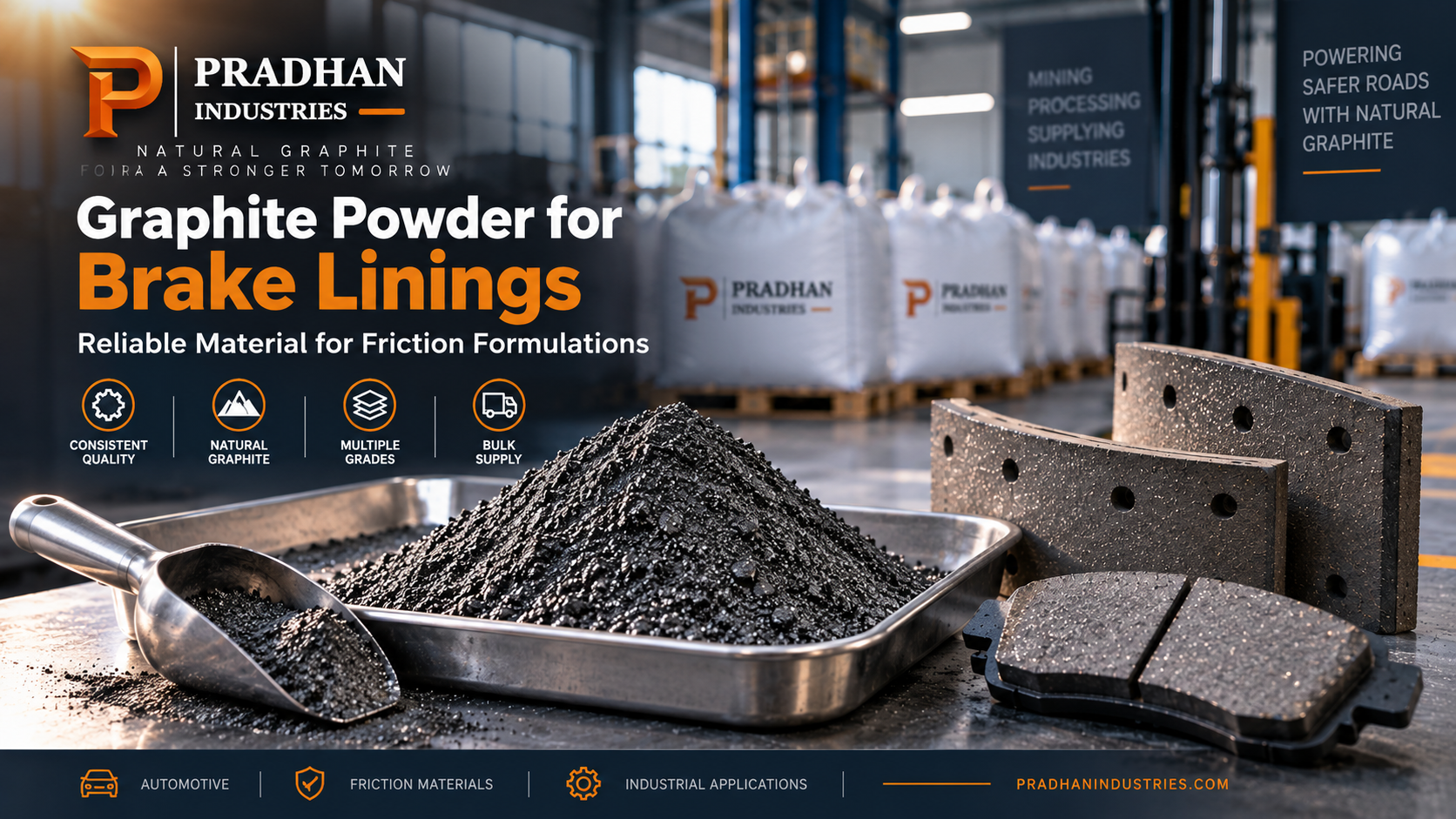
Graphite powder is used in some brake lining and friction formulations as a carbon-based functional ingredient. Its layered crystal structure and particle characteristics influence how it behaves during mixing, pressing, and service, alongside binders, fibers, and fillers. The suitable grade depends on the fixed carbon, particle size, and processing requirements of the specific formulation.
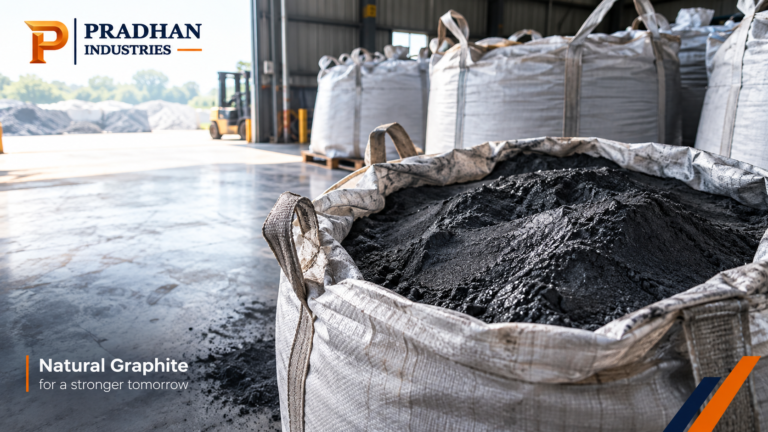
Natural graphite is a mined mineral, refined through beneficiation to raise its carbon content. Crystalline (flake) graphite is the type most often discussed for industrial powder applications, and it is supplied in a range of fixed-carbon grades and mesh sizes.
In a friction mix, graphite is one component among many. A typical lining recipe may contain binders, reinforcing fibers, abrasives, fillers, and lubricants, and these ingredients act together. Graphite falls in the solid-lubricant group, but nothing in a friction formulation works in isolation. The correct grade for one manufacturer’s process may be unsuitable for another’s, even when both are producing linings for similar vehicles.
Why Is Graphite Used in Friction Materials?
Graphite has a layered atomic structure in which the layers can shear relatively easily against each other. That property is behind its long-standing use as a dry lubricant, and it is why formulators consider it where a solid lubricant is needed in a composite. Graphite is one of several solid lubricants used in commercial friction materials, alongside molybdenum disulfide and antimony trisulfide, and dynamometer studies have compared how these behave within the same base formulation.
Carbon materials such as graphite also stay stable at the elevated temperatures reached during braking, which is one reason they appear in high-temperature composites rather than materials that soften or decompose easily.
Particle characteristics matter as well. Flake shape, particle size distribution and surface area affect how the powder disperses through a mix, how it flows during handling, and how it consolidates during pressing.
None of this means graphite alone determines braking behaviour. Friction level, wear rate, noise, fade and recovery come from the complete formulation, the manufacturing process and the counterface conditions. Graphite may contribute to a set of characteristics; it does not deliver them on its own.
Role of Graphite Powder in Brake Lining Formulations
Formulators usually describe their work as balancing. Raising the proportion of one lubricant may change the friction level, and compensating changes elsewhere then affect wear or noise. Because of that, graphite content in a formulation is a decision for the manufacturer’s development team, not something a raw-material supplier should prescribe.
What a supplier can influence is the material delivered. Particle size affects dispersion: a coarser powder behaves differently in a mix from a fine one, and the same nominal grade with a different size distribution may mix and press differently. Fixed carbon affects how much non-carbon mineral matter comes with the powder. Moisture affects handling, flow, and, in some processes, pressing behavior.
Consistency deserves the most attention. A plant that has approved a formulation is relying on each incoming lot resembling the one tested. Changes in the raw material rather than in the recipe are a common cause of unexplained variation in production.
Natural Graphite vs. Other Graphite Types for Friction Applications
Natural graphite is mined and beneficiated. Commercial grades are usually described by fixed carbon percentage and mesh size. Its properties reflect the deposit and the degree of processing.
Synthetic graphite is manufactured from petroleum coke and coal tar pitch through high-temperature graphitization. It generally offers higher purity and tighter consistency, at a higher production cost.
Crystalline graphite describes the well-ordered flake form of natural graphite, as distinct from amorphous grades, which are less graphitic and typically lower in carbon content.
No single type suits every friction application. The choice depends on required purity and fixed carbon, particle size and morphology, how the material behaves in the mix, the cost position of the formulation, and the plant’s own processing conditions. Many friction manufacturers evaluate more than one source and qualify each through trials.
What Graphite Specifications Should Brake Lining Manufacturers Check?
Fixed carbon. Fixed carbon is the carbon remaining after moisture, volatile matter, and ash are accounted for. The balance is mostly mineral ash. Buyers specify an FC range because it defines how much non-carbon material arrives with each tonne.
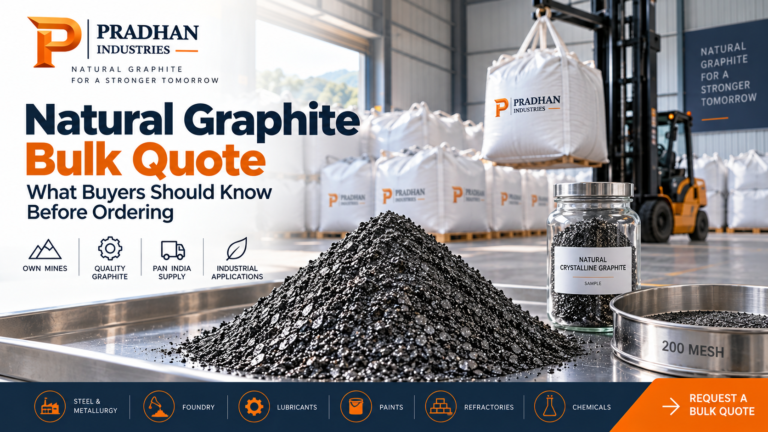
Mesh and particle size. State the mesh and whether material should pass through the sieve (−200 mesh) or be retained on it (+100 mesh). Where the distribution matters, ask for sieve analysis rather than a single number.
Purity and impurities. Ash chemistry varies with the deposit. Ask what the ash typically consists of and whether any element is restricted in your process.
Moisture. Powders can pick up moisture in transit and storage. Agree on a maximum and note the packing used.
Batch-to-batch consistency. Ask for analysis reports from several past lots, not one sample report, and agree on tolerances on FC and mesh in writing.
COA and technical documentation. Request a Certificate of Analysis with each consignment and a technical data sheet before the first order. Confirm which parameters appear on the certificate and how they are determined.
Choosing the Right Graphite Mesh Size for Brake Linings
Mesh is the number of openings per linear inch of a sieve. A higher mesh number means smaller openings and a finer powder. A 100-mesh sieve has openings around 150 microns, a 200-mesh sieve around 75 microns, and a 300-mesh sieve roughly 45–53 microns depending on the standard used.
Finer powders disperse differently in a mix and have more surface area; coarser material behaves differently during mixing and pressing. Neither is universally correct. The required mesh should follow from the formulation, the mixing equipment and the pressing process, which is why development trials usually settle it.
Pradhan Industries supplies natural crystalline graphite in several fixed-carbon grades and mesh options, including 100, 200, and 300 mesh depending on the grade, along with pulverized and unpulverized material. The current grade and mesh combinations are listed on the crystalline graphite product page.
How to Select a Graphite Powder Supplier in India
Work through these points before committing to a volume order:
- Source. Does the supplier mine and process its own material or trade bought-in powder?
- Grades and mesh options. Can it supply the FC range and mesh you need consistently?
- Consistency. Ask for historical analysis data across lots.
- Technical specifications. A technical data sheet should exist before you ask for it.
- Quality documentation. Confirm that a COA accompanies each consignment.
- Packaging. Check bag type, size, marking, and moisture protection.
- Bulk capability. Can your monthly requirement be met without gaps?
- Logistics. Who arranges transport, and how are delays communicated?
- Communication. A supplier that asks about your process before quoting is more likely to supply the right grade.
Pradhan Industries has operated since 1976 and handles mining, beneficiation and processing of natural graphite in Odisha, with bulk supply across India.
Why Odisha Natural Graphite Can Be Relevant for Indian Industrial Buyers
Odisha is one of India’s graphite-producing states, and material from Indian deposits generally requires beneficiation before it is marketed. For friction material plants in Maharashtra, Gujarat, Tamil Nadu, Punjab, or the eastern states, domestic sourcing shortens the supply chain, simplifies documentation compared with imports, and makes it easier to hold a technical conversation with the producer.
Domestic supply also makes trials more practical. Samples, revised mesh specifications, and repeat lots can be arranged without the lead times and minimum volumes that imports often involve. What matters in the end is the specification and its consistency; the geography simply makes those easier to manage.
Graphite Powder for Brake Linings: What Buyers Should Ask Before Ordering
- Which fixed-carbon grade does the formulation require?
- Which mesh size, and passing or retained?
- Is pulverized material needed?
- What purity or impurity limits apply?
- What quantity is required for trial and for monthly supply?
- What packaging suits your unloading and storage?
- Is a COA or technical specification needed with each lot?
- Where is the delivery location, and is the price ex-works or delivered?
- Are samples required before the bulk order?
Frequently Asked Questions
What is graphite powder used for in brake lining?
Graphite powder for brake lining production is used as a carbon-based functional ingredient in some friction formulations. It belongs to the solid lubricant group and works alongside binders, fibers, abrasives, and fillers. How much is used, and whether it is used at all, depends on the formulation the manufacturer has developed and qualified.
Why is graphite used in friction materials?
Graphite has a layered structure whose layers shear relatively easily, which is the basis of its lubricating behavior, and carbon materials remain stable at high temperatures. In a composite these characteristics may contribute to how the material behaves, though friction, wear, and noise depend on the full formulation and process.
Which graphite is suitable for brake lining formulations?
There is no single answer. Natural, crystalline, and synthetic graphites are all used in friction materials, and the appropriate choice depends on required purity, fixed carbon, particle size, morphology, and cost. Most manufacturers evaluate candidate grades through their own trials before approving a material.
Does graphite mesh size matter in brake lining?
Particle size affects dispersion in the mix and handling and pressing behavior, so mesh is a specification worth fixing rather than leaving open. Finer and coarser powders are not interchangeable. The required mesh should be decided from the formulation and equipment and confirmed by sieve analysis on the supplier’s certificate.
How do I choose graphite powder for friction materials?
Start from the formulation requirement, then define fixed carbon, mesh, and any impurity limits. Request a technical data sheet and past batch analyses, take a sample for lab and trial work, and only then move to a trial lot. Agree on tolerances and testing arrangements before the first bulk order.
Can I buy graphite powder in bulk from India?
Yes. Indian producers supply natural graphite in bulk domestically, in several fixed-carbon grades and mesh sizes. Share your grade, mesh, quantity, packaging, and delivery location when enquiring, since a quotation without a specification is only an estimate.
What specifications should I request from a graphite powder supplier?
Ask for fixed carbon, ash, moisture, volatile matter, and sieve analysis, along with the packing details and the test methods used. Request a COA with each consignment and analyses from earlier lots, which show consistency better than a single sample report.
Conclusion
Graphite can play a useful role in brake lining and friction formulations, but its contribution depends on the grade supplied and on the recipe around it. Fixed carbon defines how much carbon you are buying, particle size shapes how the powder behaves in the mix, and consistency between lots keeps an approved formulation stable in production. Those three points are worth settling before price.
Looking for graphite powder for brake lining or other friction-material applications? Contact Pradhan Industries to discuss your required graphite grade, fixed-carbon specification, mesh size, and bulk quantity.