Natural graphite is one of the most valuable industrial minerals in the modern world. Often referred to as “black gold,” it plays a critical role in industries such as battery manufacturing, steel production, renewable energy, electronics, aerospace, and advanced engineering. As the global demand for electric vehicles and clean energy technologies continues to rise, natural graphite has become a strategic resource for industrial growth and energy transition.
Natural graphite is a naturally occurring crystalline form of carbon. Although it is made from the same element as diamonds, its atomic arrangement gives it completely different physical and chemical properties. While diamonds are extremely hard, graphite is soft, conductive, heat-resistant, and highly versatile, making it suitable for a wide range of industrial applications.
Atomic Structure of Natural Graphite
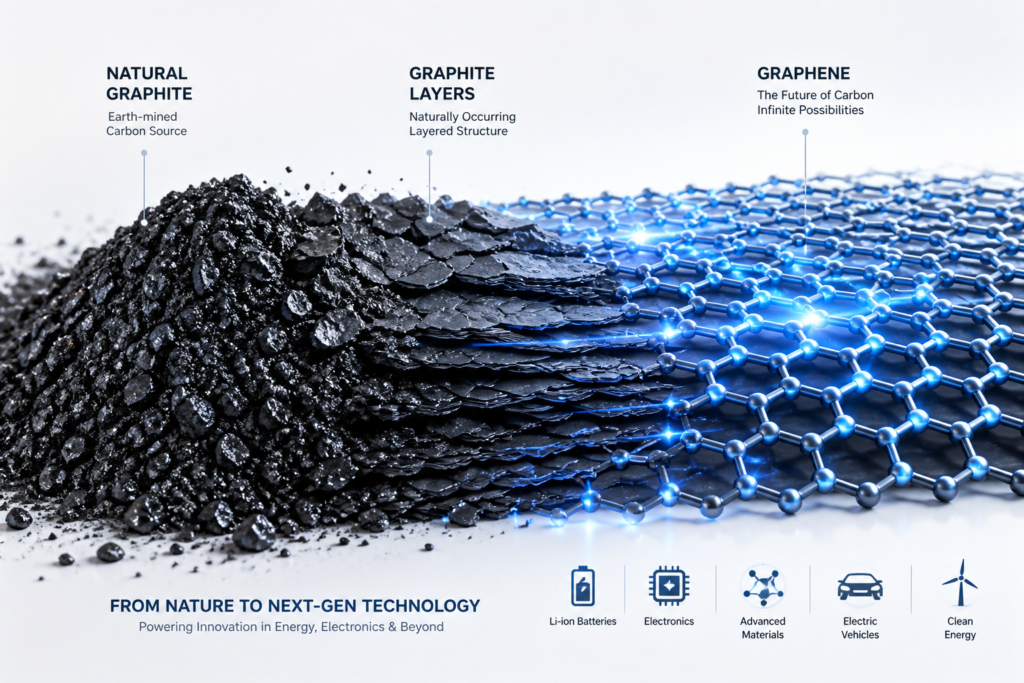
At the microscopic level, natural graphite consists of carbon atoms arranged in a hexagonal layered structure. These layers are strongly bonded internally but weakly connected to each other, allowing them to slide smoothly over one another.
Cgraphite=Hexagonal Layered StructureC_{graphite}=\text{Hexagonal Layered Structure}
This unique layered arrangement is responsible for many of graphite’s remarkable properties.
Why the Structure of Graphite Matters
The layered atomic structure gives natural graphite several important characteristics:
- Soft and slippery texture
- Excellent lubricating properties
- High electrical conductivity
- Strong thermal resistance
- Chemical stability
Unlike diamonds, which have a rigid three-dimensional bonding structure, graphite’s layered arrangement makes it softer and easier to process. This flexibility is one of the main reasons graphite is widely used across industrial sectors.
Key Properties of Natural Graphite
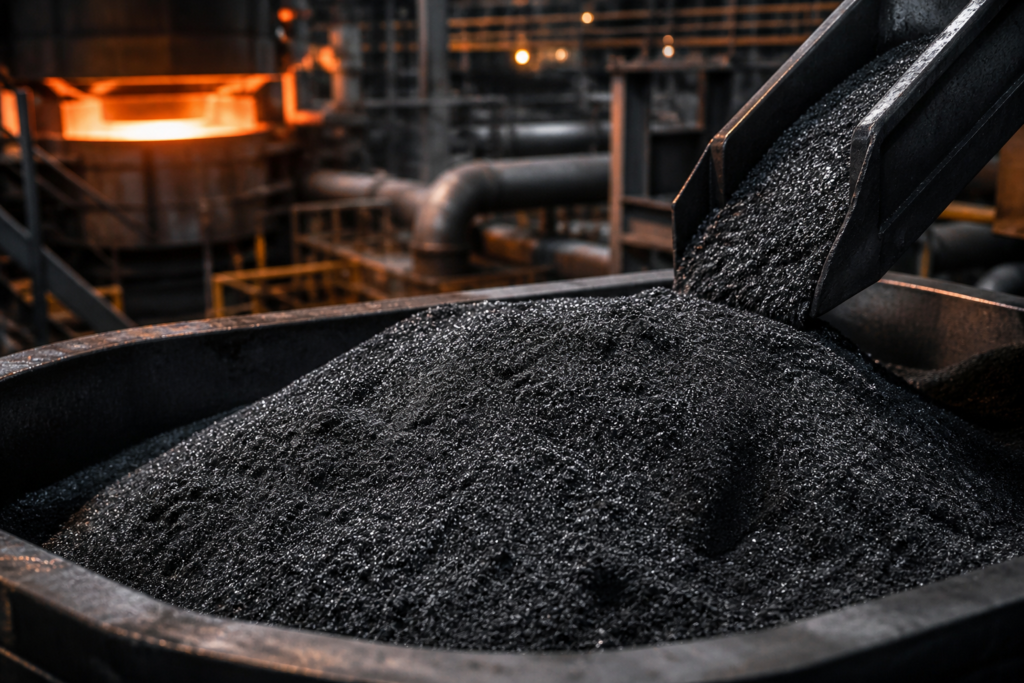
Natural graphite combines metallic and non-metallic properties, making it one of the most versatile industrial minerals available today.
1. High Electrical Conductivity
Natural graphite is an excellent conductor of electricity because of its free-moving electrons within the carbon layers. This conductivity makes graphite essential in:
- Lithium-ion batteries
- Fuel cells
- Electronic devices
- Graphite electrodes
- Electrical components
The growing demand for electric vehicles has significantly increased the importance of conductive graphite materials in battery technology.
2. Exceptional Thermal Stability
Natural graphite can withstand extremely high temperatures without losing its structural integrity.
T>3000∘CT > 3000^{\circ}C
Because of this property, graphite is widely used in:
- Metallurgical furnaces
- Refractory linings
- Aerospace components
- Industrial crucibles
- Thermal insulation systems
Its ability to resist thermal shock makes it highly reliable in high-temperature industrial environments.
3. Self-Lubricating Characteristics
Due to its layered atomic structure, graphite acts as a natural dry lubricant. The layers slide easily against each other, reducing friction between moving surfaces.
Unlike oil-based lubricants, graphite:
- Works in extreme temperatures
- Performs under high pressure
- Does not evaporate easily
- Maintains lubrication in harsh environments
This makes graphite highly suitable for industrial machinery, automotive systems, and heavy engineering applications.
4. Chemical Inertness
Natural graphite is highly resistant to corrosion, oxidation, and chemical reactions. It remains stable even when exposed to aggressive industrial chemicals.
Because of this, graphite is commonly used in:
- Chemical processing plants
- Corrosion-resistant equipment
- Acid handling systems
- Industrial reactors
Its chemical stability helps improve equipment lifespan and operational reliability.
Global Market Overview of Natural Graphite (2025–2033)
The global natural graphite market is growing rapidly due to increasing demand from battery manufacturing, clean energy technologies, and industrial applications.
Market Size and Growth
| Market Indicator | Value |
|---|---|
| Market Value (2025) | $13.29 Billion |
| Projected Value (2033) | $23.87 Billion |
| CAGR (2025–2033) | 7.8% |
The rapid expansion of electric vehicles and renewable energy infrastructure is expected to drive significant growth in graphite demand over the coming years.
Regional Market Dominance
The Asia-Pacific region dominates the global natural graphite market. Countries such as India and China play a major role in graphite mining, processing, and industrial consumption.
China currently leads the global graphite supply chain due to its large-scale refining and battery-grade graphite production capacity.
Strategic Importance of Natural Graphite
Governments around the world now classify natural graphite as a critical mineral because of its importance in:
- Electric vehicle batteries
- Renewable energy storage
- National energy security
- Advanced manufacturing technologies
- Defense and aerospace industries
As global supply chains evolve, high-purity graphite production has become strategically important for economic and industrial development.
Role of Natural Graphite in Batteries and Clean Energy
Natural graphite plays a central role in the transition toward sustainable energy systems and clean transportation technologies.
Lithium-Ion Batteries
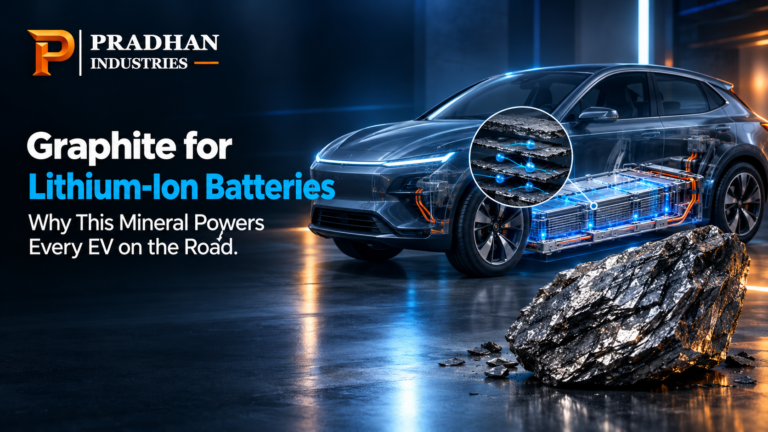
Natural graphite is primarily used as the anode material in lithium-ion batteries.
Why Graphite is Used in Batteries
Natural graphite offers several advantages:
- High energy storage capacity
- Excellent conductivity
- Long operational lifespan
- Stable charging performance
- High efficiency during charge cycles
Graphite accounts for nearly 95% of the anode material used in modern lithium-ion batteries, making it one of the most critical battery minerals.
Electric Vehicles (EVs)
The rapid growth of the electric vehicle industry has significantly increased global demand for natural graphite.
Graphite Usage in Electric Vehicles
Each electric vehicle typically requires:
70–100 kg70\text{–}100\,kg
of natural graphite for battery production.
As EV adoption continues to rise globally, graphite demand is expected to increase dramatically in the coming decade.
Renewable Energy Storage Systems
Natural graphite is also essential in large-scale energy storage systems used for:
- Solar energy storage
- Wind energy storage
- Grid stabilization
- Backup power systems
These systems help improve energy reliability and support the global transition toward renewable energy infrastructure.
Traditional Industrial Applications of Natural Graphite
Although graphite is heavily associated with modern battery technologies, it continues to play a vital role in traditional industrial sectors.
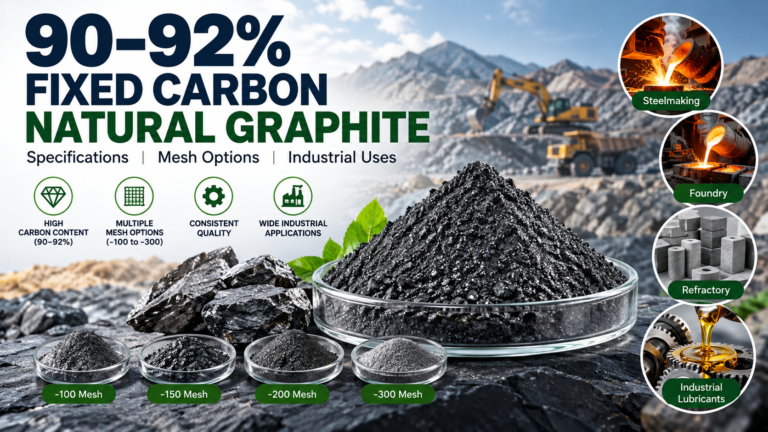
Steel Manufacturing Applications
Graphite Electrodes
Natural graphite is widely used in electric arc furnaces for steel production. Graphite electrodes can withstand extreme electrical loads and very high temperatures.
These electrodes are critical for efficient steel recycling and industrial metal production.
Refractory Materials
Graphite is commonly used in refractory products because of its thermal resistance and durability.
Applications include:
- Furnace linings
- Crucibles
- Kilns
- High-temperature insulation systems
Its resistance to thermal shock improves furnace performance and operational safety.
Foundry and Casting Industry
In foundry applications, natural graphite helps improve:
- Surface finish quality
- Mold performance
- Casting precision
- Defect reduction
Graphite-based materials are widely used in metal casting and molding operations across industrial manufacturing sectors.
Industrial Lubrication and Engineering Applications
Natural graphite is highly effective in reducing friction and wear in mechanical systems.
Dry Lubricants
Unlike conventional lubricants, graphite performs efficiently in environments where oil and grease may fail.
Graphite lubricants are commonly used in:
- High-temperature systems
- Heavy machinery
- Industrial processing equipment
- Automotive applications
Mechanical Components
Natural graphite is used in several engineering products, including:
- Bearings
- Seals and gaskets
- Brake linings
- Mechanical packing systems
Its durability and reliability make it ideal for demanding industrial environments.
Emerging Applications of Natural Graphite
The future of natural graphite extends beyond traditional industries into advanced technological innovations.
Electronics and Thermal Management
Graphite sheets and foils are increasingly used in electronic devices for efficient heat dissipation.
Applications include:
- Smartphones
- Laptops
- Semiconductor devices
- Electric vehicle electronics
Efficient thermal management helps improve device performance and operational safety.
Nuclear Energy Applications
High-purity graphite is used in nuclear reactors as a neutron moderator because of its thermal stability and radiation resistance.
Its ability to withstand extreme conditions makes it suitable for advanced nuclear technologies.
Graphene and Advanced Materials
Graphene, derived from natural graphite, is considered one of the most revolutionary materials in modern science.
Applications of Graphene
Graphene is being explored for use in:
- High-speed electronics
- Water purification systems
- Lightweight composites
- Flexible displays
- Advanced energy storage systems
As graphene technology advances, natural graphite will remain an essential raw material for future innovations.
Explore High-Quality Graphite Solutions
Explore our premium-quality natural graphite products and industrial graphite solutions designed for batteries, metallurgy, refractories, and advanced industrial applications.
Conclusion: The Future of Natural Graphite
Natural graphite has evolved from a traditional industrial mineral into a strategic material powering the future of global industry and clean energy. From steel manufacturing and industrial lubrication to electric vehicles, renewable energy storage, and advanced electronics, graphite is now essential for technological progress and sustainable development.
As industries continue moving toward electrification and clean energy solutions, the demand for high-purity natural graphite will continue to rise. Companies involved in graphite mining, processing, purification, and supply will play a critical role in shaping the future of energy, manufacturing, and industrial innovation.