If you buy graphite for steel, batteries, refractories, lubricants, or foundry work, the first question is always the same: what is the natural graphite price per tonne in India?
There is no single fixed price. In India, natural graphite typically costs anywhere from ₹40,000 to ₹150,000 per tonne for common industrial grades. Premium battery-grade or high-purity flake graphite can go well beyond this range. The final rate depends on the grade, carbon content, particle size, and market conditions.
This guide explains the price ranges and the 7 factors that affect the cost, so you can negotiate better and avoid overpaying.
(Note: These figures are indicative market ranges. Always request a fresh quotation from your supplier, as prices change often.
What Is Natural Graphite?
Natural graphite is a crystalline form of carbon that is mined from the earth. It is valued for its heat resistance, electrical conductivity, lubricity, and chemical stability. You can read more about its structure and properties in Britannica’s graphite overview.
There are three main commercial types:
- Flake graphite: Used in batteries, refractories, and fire retardants.
- Amorphous Graphite: Used in foundry, steel, and lubricant applications.
- Lump (vein) graphite: The rarest and highest-purity type, used in specialized applications.
If you are exploring the full range of options, see our natural graphite products page.
Natural Graphite Price Per Tonne in India: Indicative Price Range
Here is a general idea of what buyers see in the Indian market:
| Graphite Type / Grade | Carbon Content | Approx. Price Per Tonne ( ₹) |
|---|---|---|
| Amorphous graphite powder | 50–80% | ₹40,000 – ₹70,000 |
| Amorphous graphite powder | 80–90% | ₹60,000 – ₹95,000 |
| Flake graphite (standard) | 90–94% | ₹80,000 – ₹120,000 |
| Flake graphite (high purity) | 94–99%+ | ₹120,000 – ₹180,000+ |
| Battery-grade / spherical graphite | 99.9% | Significantly higher |
These numbers are for planning only. Real prices vary by supplier, quantity, and delivery location.
7 Factors That Affect the Natural Graphite Price Per Tonne in India
1. Carbon Content (Purity)
Carbon content is the biggest price driver. Graphite with 95% carbon costs far more than graphite with 60% carbon, because higher purity needs more processing, such as flotation and chemical purification. Always match the carbon percentage to your actual application so you don’t pay for purity you don’t need.
2. Type of Graphite (Flake, Amorphous, or Lump)
Flake graphite generally costs more than amorphous graphite because of its larger crystal structure and wider industrial use. Lump graphite is rarer, so it commands a premium. Choosing the right type for your process can cut costs significantly.
3. Flake Size and Particle Size
Larger flakes (jumbo and large flakes) are more valuable than fine or powder grades. Mesh size also matters. Finer, more precisely sized graphite powder requires extra grinding and screening, which adds to the price.
4. Import Dependence and Global Supply
India imports a large share of its graphite needs, and a few countries dominate global production. China is the leading producer, as the USGS graphite statistics show. When export policies, mining output, or shipping conditions change overseas, Indian prices often follow.
5. Demand from Batteries and Steel
Growing demand from electric vehicle batteries, energy storage, and steel production pushes prices up, especially for high-purity flake graphite. When these industries expand, supply for other buyers can tighten.
6. Currency Exchange Rates and Import Duties
Since many graphite supplies are imported or priced in US dollars, a weaker rupee raises your cost. Customs duty, freight charges, and port handling add further to the landed price per tonne.
7. Order Quantity, Packaging, and Logistics
Bulk orders usually earn a lower per-tonne rate. Packaging (25 kg bags, 50 kg bags, or jumbo bags), transport distance, and payment terms also change the final price. For official data on domestic mineral production, you can refer to the Indian Bureau of Mines.
How to Get the Best Price on Natural Graphite in India
Follow these practical tips:
- Define your specification: Know the carbon %, mesh size, and moisture limits before you ask for quotes.
- Compare multiple suppliers: Get at least three quotations on the same specification.
- Ask for a test certificate: A Certificate of Analysis (COA) confirms carbon content and quality.
- Buy in bulk when possible: Larger volumes lower the per-tonne cost.
- Check delivery terms: Compare ex-works and delivered prices fairly.
- Build a long-term relationship: Regular buyers often get stable pricing.
Need help choosing the right grade? Visit our contact page, and our team will recommend a suitable option for your requirement.
Applications That Influence Demand and Price
Natural graphite is used across many industries:
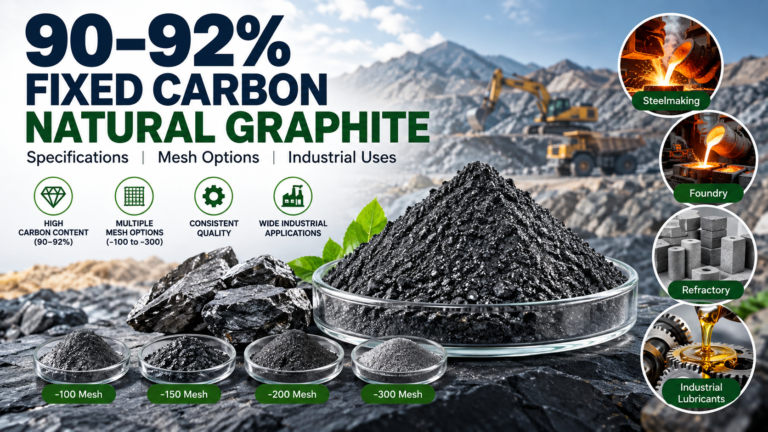
- Steel and foundry: Carbon raiser, mold coatings
- Refractories: Crucibles, bricks, and linings
- Batteries: Anode material for lithium-ion cells
- Lubricants: Greases and dry lubricants
- Pencils, paints, and coatings: Conductive and protective layers
Each application needs a different grade, which is why prices vary so widely. You can learn more in our guide to graphite uses in industry.
Frequently Asked Questions (FAQs)
What is the natural graphite price per tonne in India?
The price typically ranges from ₹40,000 to ₹150,000 per tonne, depending on carbon content, type, and particle size. High-purity grades cost more.
Why is flake graphite more expensive than amorphous graphite?
Flake graphite has a larger crystal structure, higher purity potential, and greater demand from battery and refractory industries, so it is priced higher.
Does the price change often?
Yes. Prices shift with global supply, demand from battery makers, exchange rates, and import costs. Always ask for a current quotation.
Is Indian graphite cheaper than imported graphite?
Domestic material can be cheaper in freight and duty, but quality and carbon content vary. Compare specifications, not just price.
How can I buy graphite in bulk in India?
Contact a trusted manufacturer or supplier, share your required grade and quantity, and request a quotation with a COA.
Conclusion
The natural graphite price per tonne in India depends on carbon content, graphite type, particle size, global supply, demand from batteries and steel, currency rates, and order volume. By understanding these 7 factors, you can choose the right grade, compare quotes smartly, and get better value for your money.
Ready to buy? Request a free quote today and get the best natural graphite price for your business.