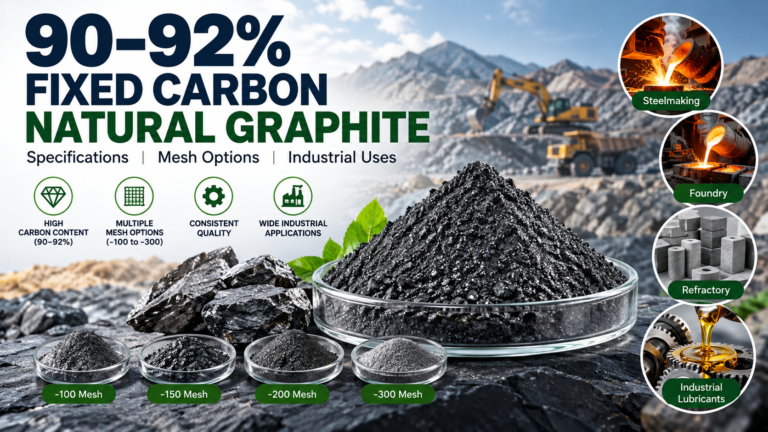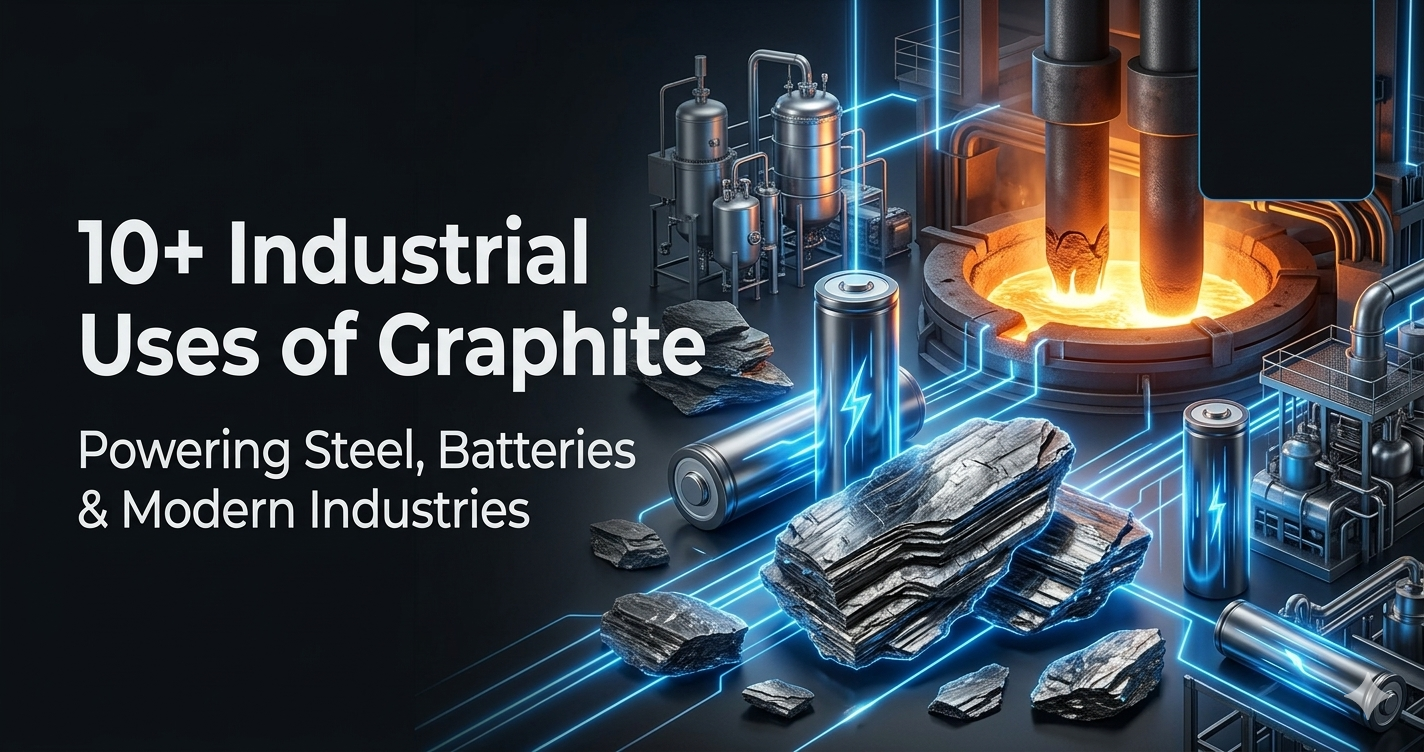
Graphite is one of the most important industrial minerals used across a wide range of industries worldwide. Known for its excellent electrical conductivity, thermal resistance, lubrication properties, and chemical stability, graphite plays a crucial role in modern manufacturing. From steel production and foundries to lithium-ion batteries and refractory applications, graphite has become an essential material that supports industrial growth and technological advancement.
Businesses looking to understand the production process and quality standards of graphite can explore our detailed guide on Graphite Manufacturing. High-purity Crystalline Graphite is widely used in steel plants, battery manufacturing, lubricants, and various high-temperature industrial applications due to its exceptional performance and reliability.
As industries continue to adopt advanced technologies, the demand for premium-grade graphite is increasing rapidly. If you are searching for a trusted Graphite Manufacturer in India, Pradhan Industries offers high-quality natural crystalline graphite sourced and processed to meet the stringent requirements of modern industries. To discuss your specific graphite requirements or request a quotation, feel free to Contact Us. In this article, we will explore the major industrial uses of graphite, its key properties, benefits, and the factors driving its growing demand across global industries.
What is Graphite?
Graphite is a naturally occurring form of carbon. It has a unique layered structure that gives it exceptional strength, conductivity, and flexibility. Unlike many other minerals, graphite can conduct electricity and withstand extremely high temperatures without breaking down.
Graphite is available in both natural and synthetic forms. Natural graphite is mined from the earth, while synthetic graphite is manufactured using petroleum coke and other carbon-rich materials.
Because of its unique physical and chemical properties, graphite is widely used in numerous industrial applications.
Key Properties of Graphite
Before understanding the industrial uses of graphite, it is important to know why industries prefer this material.
Excellent Thermal Conductivity
Graphite can efficiently transfer heat, making it ideal for high-temperature applications.
High Electrical Conductivity
It conducts electricity effectively and is widely used in electrical equipment and batteries.
Superior Lubrication
Graphite layers slide easily over one another, providing excellent lubrication without oil.
Chemical Resistance
Graphite remains stable even when exposed to many chemicals and corrosive environments.
High Temperature Resistance
It can withstand extremely high temperatures, making it suitable for furnaces and metallurgical processes.
Lightweight Yet Strong
Graphite offers a combination of strength and low weight, making it useful in various industrial products.
Major Industrial Uses of Graphite
1. Graphite in Steel Manufacturing
The steel industry is one of the largest consumers of graphite globally.
Graphite is used in electric arc furnaces where graphite electrodes help generate the intense heat required for melting scrap metal and producing steel. These electrodes can withstand extreme temperatures while maintaining excellent electrical conductivity.
Benefits of graphite in steel production include:
- High electrical efficiency
- Improved melting performance
- Resistance to thermal shock
- Long operational life
As global steel production continues to grow, the demand for graphite electrodes is also increasing.
2. Graphite in Lithium-Ion Batteries
One of the fastest-growing industrial uses of graphite is in lithium-ion batteries.
Graphite is commonly used as the anode material in rechargeable batteries found in:
- Electric vehicles (EVs)
- Smartphones
- Laptops
- Energy storage systems
- Power tools
A lithium-ion battery contains a significant amount of graphite, making it a critical material for the battery industry.
With the rapid expansion of electric vehicle production worldwide, graphite demand is expected to grow significantly in the coming years.
3. Graphite in Refractory Applications
Graphite is widely used in refractory products because of its ability to withstand high temperatures.
Refractory materials are used in:
- Steel plants
- Cement industries
- Foundries
- Glass manufacturing units
Common graphite-based refractory products include:
- Crucibles
- Refractory bricks
- Furnace linings
- Ladle linings
These products offer excellent thermal stability and durability in harsh industrial environments.
4. Graphite in Lubricants
Graphite is an excellent dry lubricant.
Unlike oil-based lubricants, graphite performs well under extreme temperatures and pressure conditions. It reduces friction between moving parts and helps improve equipment performance.
Industries using graphite lubricants include:
- Automotive manufacturing
- Mining
- Heavy machinery
- Aerospace
- Industrial equipment
Graphite lubricants are especially useful in environments where traditional lubricants may fail.
5. Graphite in Foundry Applications
Foundries use graphite extensively during metal casting processes.
Graphite helps improve mold performance and provides smooth casting surfaces. It also prevents molten metal from sticking to molds.
Applications include:
- Mold coatings
- Casting powders
- Core washes
- Release agents
Using graphite in foundry operations improves product quality and reduces manufacturing defects.
6. Graphite in Electrical Industries
Due to its electrical conductivity, graphite is widely used in electrical applications.
Common uses include:
- Carbon brushes
- Electrical contacts
- Conductive coatings
- Electrodes
Graphite components help ensure reliable electrical performance while maintaining durability under continuous operation.
7. Graphite in the Automotive Industry
The automotive sector depends heavily on graphite for several applications.
Graphite is used in:
- Brake linings
- Clutch materials
- Gaskets
- Battery systems
- Lubricants
As electric vehicles become more popular, graphite consumption in the automotive industry is expected to increase dramatically.
8. Graphite in Aerospace Applications
The aerospace industry values graphite because it is lightweight and highly durable.
Graphite materials are used in:
- Aircraft components
- Rocket systems
- Thermal protection systems
- High-temperature parts
Its ability to maintain performance under extreme conditions makes it an ideal material for aerospace engineering.
9. Graphite in Nuclear Reactors
Graphite plays a crucial role in certain nuclear reactors.
It acts as a neutron moderator, helping control nuclear reactions safely and efficiently.
Benefits include:
- Thermal stability
- Radiation resistance
- Long operational life
Special grades of high-purity graphite are used for these highly specialized applications.
10. Graphite in Chemical Processing Industries
Chemical plants often use graphite equipment because of its corrosion resistance.
Common applications include:
- Heat exchangers
- Pipes
- Pumps
- Reactor vessels
Graphite can withstand exposure to aggressive chemicals that would damage many metals.
This property makes it valuable for chemical manufacturing operations.
Emerging Industrial Applications of Graphite
The industrial landscape is changing rapidly, and graphite is finding new applications in modern technologies.
Renewable Energy Systems
Graphite is increasingly used in renewable energy storage solutions, including large battery systems that support solar and wind power generation.
Fuel Cells
Fuel cell technology uses graphite components because of their conductivity and chemical resistance.
Electronics Manufacturing
Graphite helps manage heat in advanced electronic devices and semiconductor production.
Advanced Composites
Graphite-based composites offer high strength and low weight, making them useful in engineering applications.
These emerging sectors are creating additional demand for high-quality graphite products.
Advantages of Using Graphite in Industry
Graphite provides several benefits that make it a preferred industrial material.
Improved Efficiency
Its conductivity and heat resistance improve the performance of industrial processes.
Reduced Maintenance Costs
Graphite components often last longer, reducing replacement and maintenance expenses.
Better Product Quality
Industries achieve more consistent results when using graphite in manufacturing operations.
Energy Savings
Graphite’s conductivity helps optimize energy usage in various industrial systems.
Environmental Benefits
Many graphite applications support cleaner technologies such as electric vehicles and renewable energy storage.
Factors Driving Global Graphite Demand
Several factors are contributing to increasing graphite consumption worldwide.
Growth of Electric Vehicles
Electric vehicle batteries require large amounts of graphite, making EV production a major demand driver.
Expansion of Steel Manufacturing
Growing infrastructure development continues to increase steel production and graphite electrode consumption.
Renewable Energy Investments
Energy storage systems require graphite-based battery technologies.
Technological Advancements
Modern electronics, aerospace systems, and industrial equipment continue to create new graphite applications.
As these industries expand, graphite will remain a strategic industrial mineral.
Choosing High-Quality Industrial Graphite
Selecting the right graphite product is essential for achieving optimal performance.
Important factors include:
- Purity level
- Particle size
- Carbon content
- Thermal conductivity
- Electrical conductivity
- Mechanical strength
Working with a reliable graphite supplier ensures consistent quality and dependable industrial performance.
Future of Graphite in Industrial Applications
The future of graphite looks extremely promising.
As industries focus on electrification, renewable energy, and advanced manufacturing, graphite demand is expected to rise significantly. The rapid growth of electric vehicles alone is creating unprecedented opportunities in the graphite market.
Researchers are also developing new graphite-based technologies that could further expand its industrial applications.
With its unique combination of conductivity, heat resistance, durability, and versatility, graphite will continue to be one of the most valuable industrial materials for decades to come.
The global demand for graphite continues to grow as industries increasingly rely on advanced materials for manufacturing and energy storage. According to the U.S. Geological Survey (USGS), graphite is considered a critical mineral due to its importance in lithium-ion batteries, steel production, and various industrial applications. As electric vehicle adoption and renewable energy investments increase worldwide, the need for high-quality graphite is expected to rise significantly in the coming years.
Conclusion-
Graphite has become an essential material across numerous industries, including steel manufacturing, batteries, refractories, lubricants, foundries, aerospace, electronics, and chemical processing. Its exceptional properties such as electrical conductivity, thermal resistance, lubrication, and chemical stability make it indispensable for modern industrial operations.
The growing adoption of electric vehicles, renewable energy systems, and advanced technologies is driving strong global demand for graphite. As industries continue to evolve, the industrial uses of graphite will expand even further, creating new opportunities and reinforcing its position as one of the most important industrial minerals in the world.
For businesses seeking reliable and high-performance graphite solutions, choosing quality products from an experienced supplier is essential for achieving long-term operational success.