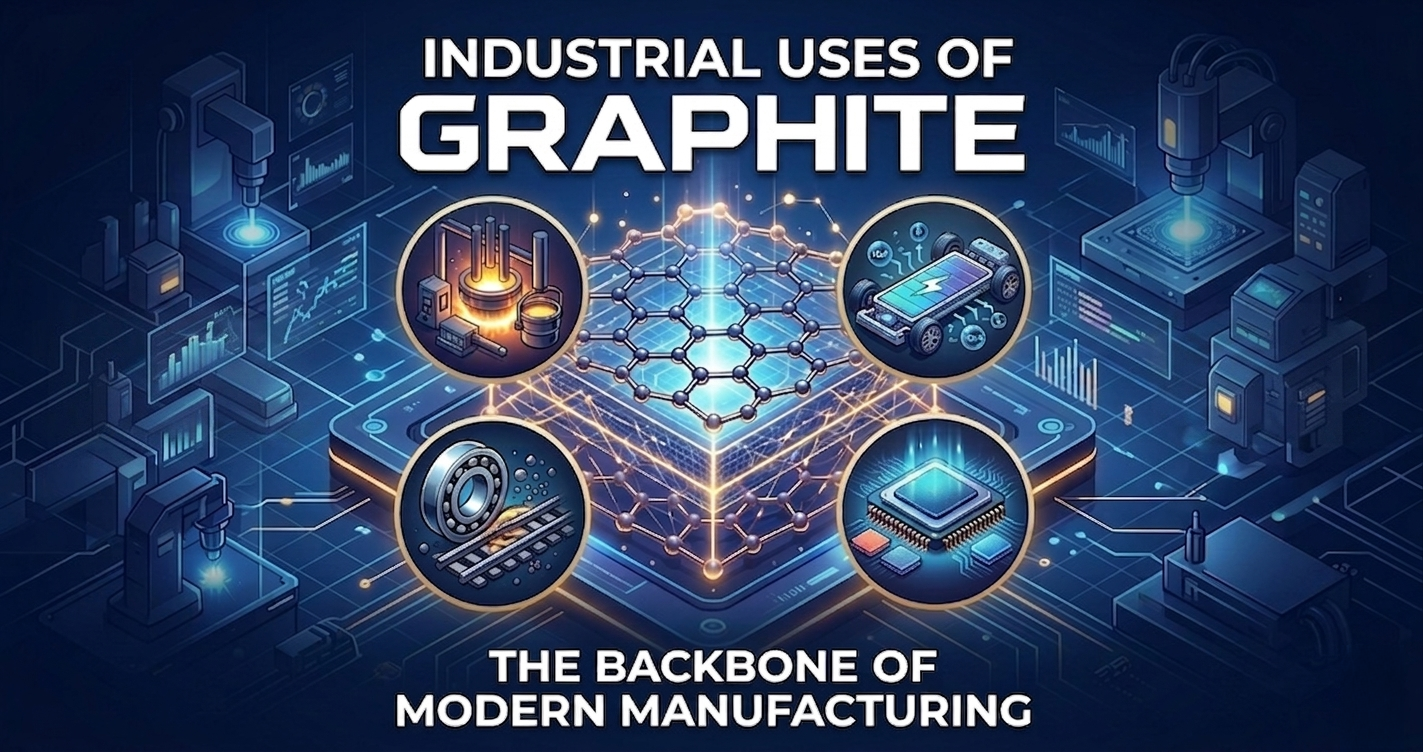
Graphite is one of the most versatile and valuable industrial minerals used across the globe. From steel plants and foundries to electric vehicles and advanced electronics, graphite plays a critical role in keeping modern industries running efficiently. Its unique combination of electrical conductivity, thermal stability, lubricating properties, and chemical resistance makes it an indispensable material in countless manufacturing processes.
The importance of graphite has grown significantly in recent years as industries focus on cleaner energy solutions, advanced manufacturing technologies, and high-performance materials. According to recent industry reports, the global graphite market was valued at approximately USD 13.29 billion in 2025 and is projected to reach nearly USD 23.87 billion by 2033, reflecting strong demand from industrial and energy sectors. The rapid expansion of electric vehicles, battery production, and steel manufacturing continues to create new opportunities for graphite applications across the world.
At Pradhan Industries, we understand the increasing importance of high-quality graphite products for industrial operations. This comprehensive article explores the major industrial uses of graphite and explains why it remains one of the most sought-after materials in modern manufacturing.
Understanding Graphite and Its Unique Properties
Graphite is a naturally occurring form of carbon with a crystalline structure that gives it remarkable industrial characteristics. Unlike many other minerals, graphite combines metallic and non-metallic properties. It can conduct electricity like a metal while maintaining the flexibility and chemical stability often associated with non-metallic materials.
What Makes Graphite Different from Other Industrial Minerals?
Most minerals fail when they face both extreme heat and high electrical current simultaneously. For example, metals melt at high temperatures, and ceramics shatter under quick thermal changes. Graphite bridges this gap. It does not melt under normal atmospheric pressure; instead, it transitions directly from a solid to a gas at temperatures above 3600°C. This makes it an anomaly in the mineral world and an absolute necessity for heavy industries.
Key Physical and Chemical Characteristics
-
Layered Carbon Structure: The carbon atoms in graphite are arranged in hexagonal rings that form flat sheets. These sheets are tightly bonded internally but loosely attached to each other. This allows the layers to slide past one another smoothly.
-
Thermal Shock Resistance: Graphite can go from room temperature to thousands of degrees within minutes without cracking or warping.
-
High Chemical Inertness: It does not easily react with acids, alkalis, or molten metals, making it perfect for handling aggressive chemical compounds.
-
Anisotropic Behavior: Its properties differ depending on the direction of the grain, allowing engineers to design products that direct heat or electricity exactly where it is needed.
Why Industries Depend on Graphite
Industrial materials must perform reliably under harsh operating conditions, and graphite excels in this area. Its excellent electrical conductivity allows it to be used in electrodes and battery systems. Its thermal conductivity helps transfer and dissipate heat efficiently in manufacturing and electronic applications.
Conductivity, Heat Resistance, and Durability
In modern factories, machinery runs 24/7. Materials degrade due to friction, heat build-up, and chemical exposure. Graphite provides an all-in-one solution. Its durability means parts do not need to be replaced constantly. When a factory uses graphite components, they save money on spare parts, reduce factory downtime, and keep production moving without sudden stops.
Growing Global Demand for Graphite
The global shift toward electrification has further strengthened graphite’s industrial importance. Industry research shows that lithium-ion batteries use graphite as the primary anode material, accounting for more than 90% of anode compositions in many battery designs. With electric vehicle adoption accelerating worldwide, graphite demand continues to rise sharply. This growing reliance highlights graphite’s strategic importance not only in traditional industries but also in future-focused technologies.
Graphite in Steel Manufacturing
The steel industry remains one of the largest consumers of graphite worldwide. Graphite electrodes are essential components in electric arc furnaces (EAFs), which are widely used for steel production. These electrodes conduct powerful electrical currents that generate the intense heat required to melt scrap steel and raw materials.
[Power Source] ---> [Graphite Electrodes] ---> [High Electrical Current] ---> [1500°C+ Heat] ---> [Scrap Steel Melts]
Graphite Electrodes in Electric Arc Furnaces
An Electric Arc Furnace works like a giant lightning bolt inside a closed container. Massive columns of graphite electrodes are lowered into the furnace. When electricity passes through them, it creates an intense electric arc that reaches temperatures well above 1500°C. Graphite is the only material that can carry this much electricity without melting away immediately. While the electrodes do wear down slowly over time, their survival rate under these conditions is unmatched by any metal.
Importance in Metal Processin
Modern steelmakers increasingly favor electric arc furnace technology because it offers lower emissions and greater energy efficiency compared to traditional blast furnace methods. As more steel plants adopt EAF technology, the demand for graphite electrodes continues to expand. Recent industry data indicates that the electrode segment represents one of the largest applications within the global graphite market.
Furthermore, graphite acts as a carbon additive (recarburizer) in steelmaking. It is added to molten iron to adjust the carbon content precisely, which determines the final hardness, tensile strength, and quality of the steel.
Graphite in Refractory Applications
Refractory materials are designed to withstand extreme temperatures encountered in industrial furnaces, kilns, reactors, and metal processing systems. Graphite plays a crucial role in these applications due to its excellent heat resistance and thermal conductivity.
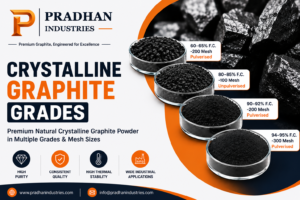
high-quality graphite products
High-Temperature Resistance
In a standard foundry or metal plant, the walls of the furnaces must be lined with materials that won’t melt or degrade when touched by liquid metal. Graphite-containing refractories, such as alumina-carbon or magnesia-carbon bricks, are used to line these dangerous zones. The graphite inside these bricks prevents the liquid steel from burning through the furnace walls, ensuring a safe working environment.
Furnace and Kiln Components
Beyond bricks, graphite is shaped into custom components for industrial kilns and chemical reactors, including:
-
Furnace Trays: Used to hold parts that need to go through intense heat treatment processes.
-
Stirring Rods: Used to mix molten metal alloys to ensure an even distribution of materials.
-
Heating Elements: Used in specialized vacuum furnaces where metal wires would burn out.
Graphite in Battery Manufacturing
Battery manufacturing has emerged as one of the fastest-growing applications for graphite. Lithium-ion batteries, which power electric vehicles, smartphones, laptops, renewable energy storage systems, and countless other devices, rely heavily on graphite anodes.
Role in Lithium-Ion Batteries
To understand why graphite is so important here, look at how a battery works. A battery has two sides: a cathode (positive) and an anode (negative). In a typical lithium-ion battery, graphite serves as the primary material for the anode.
When you charge your phone or EV, lithium ions move from the cathode and pack themselves into the spaces inside the layered structure of the graphite. When you use the device, those ions slide back out. Graphite’s stable structure allows this repeated energy transfer to happen thousands of times without the battery physically breaking down or losing its capacity quickly.
Charging:   [Cathode] --------(Lithium Ions)--------> [Graphite Anode Stores Ions]
Discharging: [Cathode] <--------(Lithium Ions)-------- [Graphite Anode Releases Ions]
EV Industry Driving Demand
The rise of electric vehicles has dramatically increased graphite demand. Industry studies estimate that a single electric vehicle battery pack can contain between 50 and 100 kilograms of graphite. This is significantly more than the amount of lithium or cobalt used in the same battery. As governments and consumers embrace cleaner transportation technologies, battery manufacturers continue expanding production capacity, turning graphite into a strategic resource for global supply chains.
Graphite in Lubricants
One of graphite’s oldest and most reliable industrial uses is lubrication. Unlike traditional liquid lubricants like oil or grease, graphite functions effectively in environments where liquids would boil away, freeze, or attract performance-destroying dust.
Dry Lubrication Advantages
Because of its layered crystal structure, graphite powder can be applied directly to moving mechanical parts as a dry lubricant. The individual layers slide over each other with very little effort, dropping friction down to near zero.
-
Zero Melting/Boiling: Liquid oils break down or catch fire at high temperatures. Graphite stays stable.
-
No Dust Collection: Liquid grease acts like a magnet for dirt, sand, and dust, creating an abrasive paste that destroys gears. Dry graphite lubricates without making things sticky.
-
Vacuum Compatibility: In deep space or high-vacuum manufacturing chambers, liquids evaporate instantly. Graphite remains perfectly intact.
Industrial Machinery Applications
Industries including mining, automotive manufacturing, aerospace, and heavy engineering rely on graphite lubricants. It is commonly used in heavy industrial conveyor belts, railway track switches, high-temperature baking ovens, and internal locks or hinges that need to operate smoothly for decades without maintenance.
Graphite in Foundry Operations
Foundries use graphite extensively during metal casting and molding processes. Its thermal conductivity and non-reactive nature make it ideal for molds, crucibles, and casting equipment.
Mold and Casting Applications
When you pour liquid iron or brass into a mold to make a engine block or a metal pipe, you need the mold to keep its shape perfectly. Foundries use solid graphite molds for continuous casting operations. Because graphite conducts heat quickly, it cools the molten metal evenly, preventing internal cracks, gas bubbles, and structural weak spots in the final product.
Additionally, foundries use thin graphite coatings sprayed onto traditional sand molds. These coatings act as a protective barrier. They reduce friction between the molten metal and the mold surface, which gives the finished metal parts a much smoother surface finish and decreases the number of factory rejection rates.
Graphite in Electronics Industry
Modern electronics depend heavily on materials capable of managing heat and conducting electricity efficiently. Graphite fulfills both requirements exceptionally well, making it a valuable component in electronic devices and systems.
Thermal Management Solutions
As microchips, computer processors, and smartphones become smaller and more powerful, they generate a massive amount of internal heat. If this heat isn’t removed instantly, the electronics will slow down or burn out.
Flexible graphite sheets are integrated inside modern electronic enclosures. These ultra-thin sheets act as thermal spreaders. They pull the heat away from hot processors and spread it evenly across a larger surface area, keeping high-performance hardware cool and reliable.
[Hot Processor] ---> [Flexible Graphite Sheet] ---> [Heat Spread Evenly] ---> [Safe Device Temps]
Conductive Components
Beyond heat management, graphite is used to manufacture essential electrical parts, including:
-
Carbon Brushes: Used in electric motors to pass electrical current from stationary wires to the rotating parts of the motor.
-
Circuit Board Coatings: Used to create anti-static pathways and electromagnetic interference (EMI) shielding layers to protect sensitive signals.
Graphite in Chemical Processing
Chemical processing facilities often operate in highly corrosive environments where traditional metals and alloys deteriorate rapidly. Graphite offers exceptional chemical resistance, making it ideal for equipment exposed to aggressive acids, solvents, and high-temperature reactions.
Corrosion-Resistant Equipment
In chemical production plants, fluids like hydrochloric acid or sulfuric acid can eat through stainless steel pipes within weeks. High-purity graphite is completely unaffected by these aggressive liquids. Because of this, engineering firms build large-scale graphite heat exchangers, distillation columns, reactors, and industrial piping networks.
By utilizing graphite components, chemical plants prevent dangerous material failures, decrease hazardous environmental leaks, and extend the operating life of their infrastructure.
Industrial Performance Matrix: Graphite vs Industrial Stress
To summarize how graphite compares to traditional materials under real factory conditions, look at this performance metric matrix:
| Operating Stress Element | Performance of Metals | Performance of Ceramics | Graphite Solution |
| Extreme Heat (1500°C+) | Melts or loses structural strength | Stays solid but can warp | Remains perfectly stable; strength actually increases with heat |
| Rapid Thermal Shock | Expands quickly; can warp paths | Catastrophically cracks and shatters | Zero issues; handles sudden temperature drops smoothly |
| Strong Chemical Acid Exposure | Corrodes and rusts within days | Can degrade slowly over time | Completely inert; does not react with aggressive chemicals |
| High Friction Zones | Requires constant liquid oil top-ups | Causes heavy wear on contacting surfaces | Self-lubricating layers provide smooth dry motion |
Future Opportunities for Graphite
The future of graphite appears exceptionally promising. Growing investments in electric vehicles, renewable energy storage, advanced electronics, and sustainable manufacturing are creating unprecedented demand for graphite products. Industry forecasts indicate steady growth throughout the coming decade as these sectors continue expanding.
Renewable Energy and Advanced Technologies
Governments and industries worldwide increasingly recognize graphite as a critical mineral due to its importance in clean energy technologies and industrial supply chains. New mining projects, processing facilities, and recycling initiatives are being developed to secure long-term graphite availability.
Furthermore, scientists are expanding into the world of Graphene—which is a single layer of carbon atoms sourced directly from natural flake graphite. Graphene is the thinnest, strongest material discovered on Earth. It is currently being integrated into next-generation aerospace composites to build lighter aircraft, high-speed hydrogen fuel cells, and medical diagnostic equipment.
Conclusion
Graphite has evolved from a traditional industrial mineral into a strategic material that supports some of the world’s most important industries. Its applications in steel manufacturing, refractories, batteries, lubricants, foundries, electronics, and chemical processing demonstrate its unmatched versatility and value.
As industrial technology advances and the global economy moves toward electrification and sustainability, graphite’s importance will only continue to grow. Companies that rely on reliable, high-performance materials can benefit significantly from integrating quality graphite products into their operations.
At Pradhan Industries, we are committed to providing premium graphite solutions that help businesses achieve operational excellence, improved productivity, and long-term success in an increasingly competitive industrial landscape.