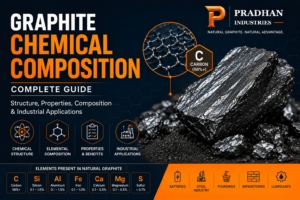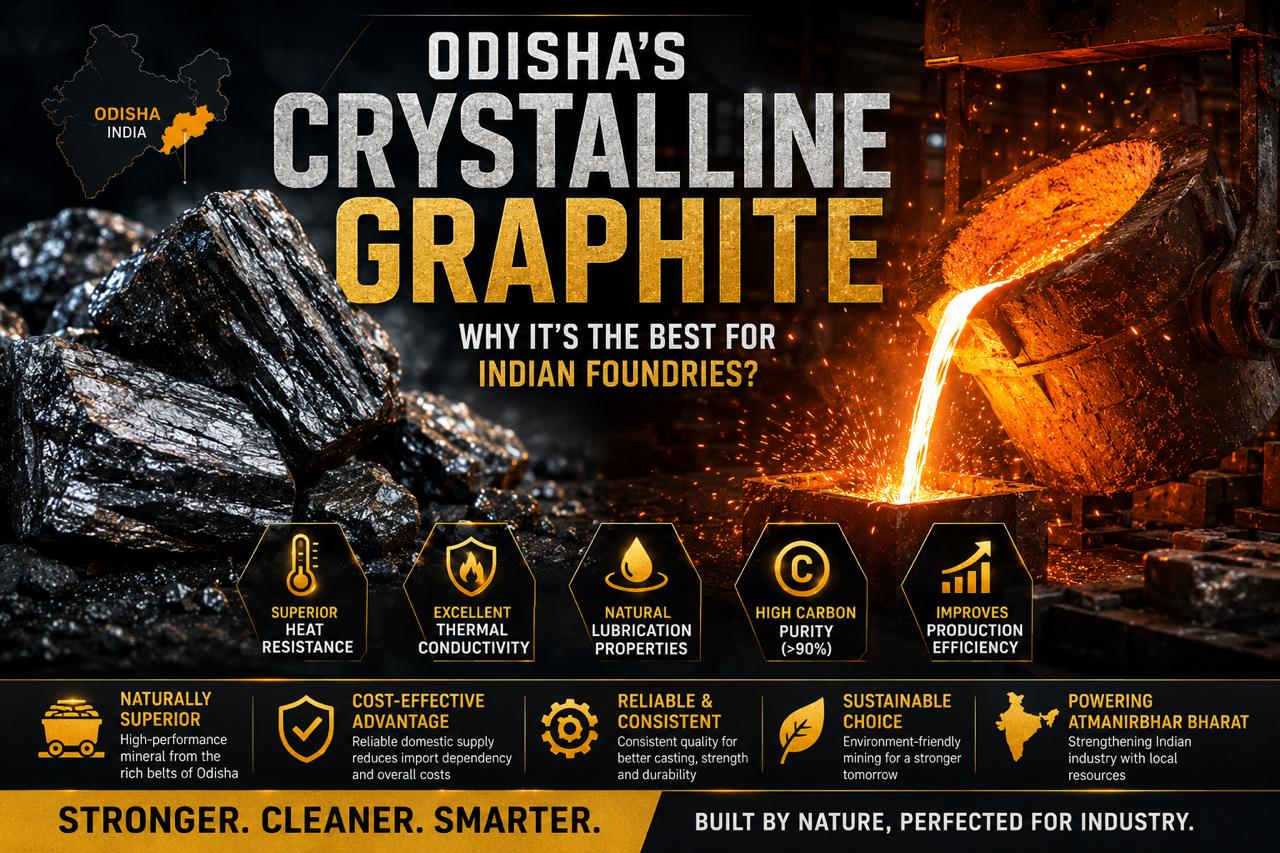
Odisha Crystalline Graphite is increasingly preferred in modern steel foundries because of its high thermal conductivity and excellent carbon purity. Industries looking for premium Natural Graphite Powder can benefit from Odisha’s rich mineral reserves and advanced industrial applications. According to the Indian Bureau of Mines, graphite demand in India is expected to rise significantly due to expanding manufacturing and EV industries.
The growing importance of graphite is not just a local trend. India’s graphite demand is expected to rise sharply due to growth in steel manufacturing, electric vehicles, refractories, and advanced industrial applications. Recent market studies indicate that India’s graphite demand could reach nearly 150,000 metric tons by 2030, while domestic production still struggles to meet demand. This widening supply gap is forcing industries to focus on high-quality domestic sources, and Odisha has become one of the strongest players in this space.
What makes Odisha’s crystalline graphite special is not only its availability but also its physical structure, purity, flake size, thermal stability, and industrial adaptability. Foundries require materials that can survive extreme heat while maintaining structural integrity, and crystalline graphite performs exceptionally well under these conditions. It behaves almost like the “silent backbone” of industrial casting operations — rarely visible to the final customer, yet absolutely essential to product quality.
Before we dive deeper into the technical and industrial advantages, let’s first look at the complete structure of this article.
Understanding Crystalline Graphite
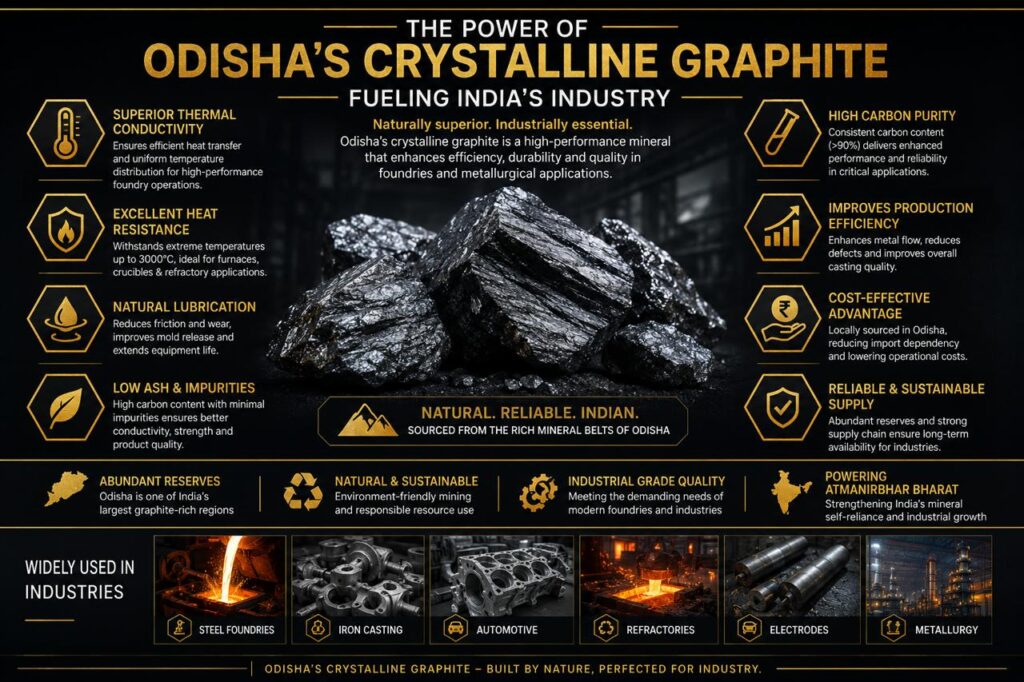
Graphite is one of those fascinating minerals that quietly powers modern industry. Most people know graphite as the material inside pencils, but industrial graphite is far more advanced and valuable than that simple image suggests. Crystalline graphite, especially natural flake graphite, is highly prized because of its layered atomic structure. These layers allow the material to withstand extremely high temperatures while also providing excellent lubrication and conductivity properties. In industrial environments where temperatures can rise beyond imagination, graphite behaves almost like an industrial superhero — stable, durable, and highly efficient.
Natural crystalline graphite forms through geological metamorphism over millions of years. Carbon-rich sediments are exposed to intense heat and pressure deep beneath the Earth’s crust, eventually transforming into crystalline graphite structures. This long natural formation process gives Odisha graphite its dense flake structure and superior industrial performance. Unlike low-grade amorphous graphite, crystalline graphite contains larger flakes and higher carbon concentrations, making it ideal for foundry applications.
According to industrial mineral studies, graphite is widely used in refractories, crucibles, foundry facings, lubricants, and electrodes because of its exceptional thermal stability and conductivity. Foundries depend heavily on these properties because even a small inconsistency in heat resistance can create defects in castings, increase wastage, and reduce productivity.
For Indian foundries competing in global markets, material quality matters enormously. Manufacturers today are not just buying raw minerals; they are investing in reliability, precision, and operational efficiency. Odisha’s crystalline graphite offers exactly that combination.
Odisha’s Rich Graphite Reserves
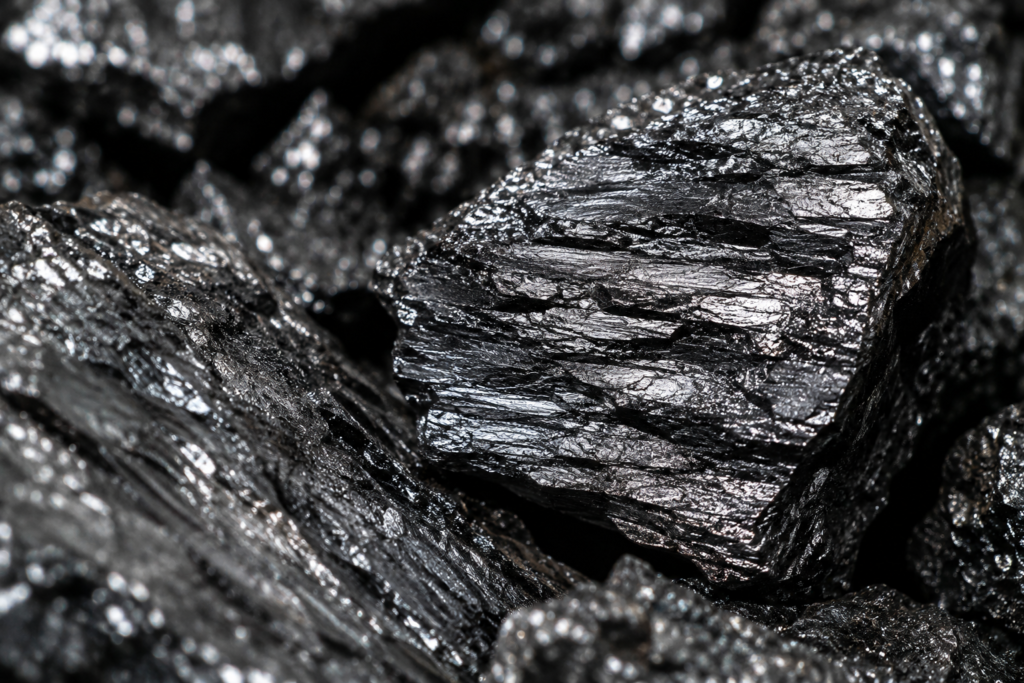
Odisha is one of India’s most important mineral-rich states. While the state is famous for iron ore, bauxite, and coal, its graphite reserves are equally significant for industrial growth. Studies indicate that Odisha accounts for nearly one-third of India’s graphite reserves and operational production capacity. This makes Odisha a strategic hub for graphite mining and processing in India.
The graphite belts in Odisha are mainly concentrated in districts such as Rayagada, Koraput, Kalahandi, Bolangir, and Nuapada. These regions contain high-quality crystalline graphite deposits with favorable flake structures. Unlike synthetic graphite, which requires extensive processing and high energy consumption, natural crystalline graphite from Odisha provides a cost-effective and environmentally friendlier alternative.
What truly differentiates Odisha graphite is the balance between purity and industrial usability. Many imported graphite materials may offer high carbon percentages but come with inconsistent supply chains and volatile pricing. Odisha’s deposits provide Indian foundries with a domestic source that is easier to procure, process, and customize according to industrial needs.
Recent industry reports also highlight India’s increasing dependence on imported graphite, especially from China. Estimates suggest India may rely on imports for nearly 69% of its graphite demand if domestic production does not expand rapidly. This creates a massive opportunity for Odisha’s graphite industry to strengthen India’s industrial self-reliance.
Think of Odisha’s graphite reserves as a hidden industrial treasure chest. While the world races toward battery technologies and advanced manufacturing, Odisha already possesses one of the key raw materials needed for future industrial growth.
Why Indian Foundries Need High-Quality Graphite
Foundries operate in one of the harshest industrial environments imaginable. Molten metals, extreme temperatures, heavy machinery, and precision casting processes demand materials that can survive intense thermal and mechanical stress. This is where graphite becomes absolutely essential.
Graphite is widely used in foundry operations for crucibles, molds, coatings, carbon additives, and refractory applications. Its high thermal conductivity allows heat to distribute evenly, reducing the risk of cracks or structural defects during metal casting. At the same time, its lubricating nature helps prevent sticking between molten metal and molds, ensuring smoother casting surfaces.
Imagine trying to bake bread in an oven with uneven heat distribution. Some parts burn while others remain uncooked. The same thing happens in foundries without high-quality graphite. Uneven heat management can create defects, poor finishes, and rejected products. Odisha’s crystalline graphite helps solve these problems by maintaining thermal consistency.
Industrial studies also emphasize the growing importance of graphite in electric arc furnaces, graphite electrodes, and advanced metallurgy. The Indian steel industry is expanding rapidly, and foundries require dependable graphite supplies to support this growth. Using inferior graphite can increase energy consumption, reduce equipment life, and create operational inefficiencies.
One of the biggest advantages for Indian foundries is local availability. Imported materials often face shipping delays, fluctuating prices, customs complications, and geopolitical uncertainties. Odisha graphite reduces these risks while supporting domestic manufacturing ecosystems.
This shift toward domestic sourcing is becoming increasingly important under India’s “Make in India” and industrial self-reliance initiatives. Foundries now realize that depending entirely on foreign graphite suppliers can be risky, especially in rapidly changing global markets.
Key Advantages of Odisha’s Crystalline Graphite
Superior Thermal Conductivity
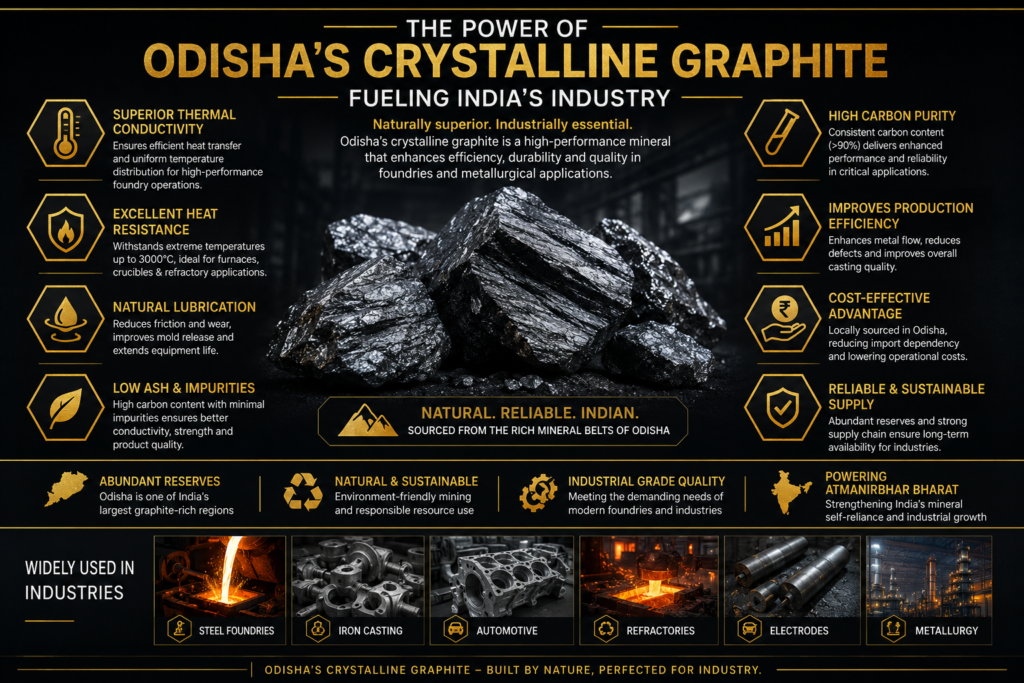
One of the defining characteristics of Odisha’s crystalline graphite is its outstanding thermal conductivity. Foundries depend on controlled heat transfer during metal melting and casting processes. Graphite acts almost like a highway for heat, distributing thermal energy efficiently and reducing localized overheating.
This property becomes especially valuable in steel and iron casting applications where temperatures exceed 1500°C. Odisha graphite maintains structural stability under these extreme conditions, helping foundries achieve consistent casting quality.
High Carbon Purity
Carbon purity directly affects graphite performance. Odisha’s crystalline graphite deposits are known for high carbon content and strong flake structures, making them suitable for industrial-grade applications. Higher purity means fewer impurities interfering with thermal conductivity or chemical resistance.
Better Lubrication Properties
Graphite’s layered atomic structure allows layers to slide over one another easily. This creates natural lubrication properties that reduce friction in molds and industrial machinery. Foundries benefit from smoother metal flow, cleaner mold release, and reduced equipment wear.
Resistance to Extreme Temperatures
Graphite can tolerate temperatures that would destroy many industrial materials. This thermal resistance makes Odisha graphite highly suitable for refractory linings, crucibles, and furnace components.
Natural graphite is also chemically stable, meaning it resists reactions with molten metals and industrial chemicals. This increases durability and lowers replacement frequency for foundry equipment.
Applications in Indian Foundries
| Application | Role of Odisha Graphite | Industrial Benefit |
|---|---|---|
| Steel Foundries | Graphite electrodes & refractories | Improved thermal efficiency |
| Iron Casting | Mold coatings & crucibles | Reduced casting defects |
| Automotive Components | Precision casting materials | Better dimensional accuracy |
| Metallurgy | Carbon additives | Enhanced metal properties |
| Refractory Industry | Heat-resistant linings | Longer equipment lifespan |
Indian foundries are increasingly moving toward high-performance materials because competition is no longer local — it is global. Automotive manufacturers, engineering firms, and export industries demand precision casting with minimal defects. Odisha’s crystalline graphite helps meet these expectations.
The automotive sector is particularly important. Precision components such as engine blocks, brake systems, and transmission parts require accurate casting with excellent thermal control. High-quality graphite ensures smoother metal flow and fewer imperfections.
India’s growing steel industry also depends heavily on graphite electrodes used in electric arc furnaces. Industry discussions increasingly highlight how domestic graphite suppliers could become strategically important as global graphite supply chains tighten.
Odisha Graphite vs Imported Graphite
Imported graphite has traditionally dominated many industrial sectors in India, particularly because of established international supply chains. However, the situation is changing rapidly. Rising logistics costs, geopolitical tensions, and fluctuating import prices are making domestic alternatives more attractive.
Here’s a quick comparison:
| Factor | Odisha Crystalline Graphite | Imported Graphite |
|---|---|---|
| Availability | Faster domestic supply | Shipping delays possible |
| Cost Stability | More stable pricing | Highly volatile |
| Customization | Easier local processing | Limited flexibility |
| Import Duties | None | Additional import costs |
| Supply Reliability | Strong domestic access | Global disruptions possible |
Odisha graphite also offers strategic advantages for long-term industrial planning. Businesses no longer want to depend entirely on overseas suppliers for critical raw materials. Domestic sourcing provides better inventory management, faster deliveries, and improved communication between suppliers and manufacturers.
Environmental and Economic Benefits
Using Odisha’s graphite is not only an industrial decision; it is also an economic and environmental one. Local sourcing reduces transportation emissions and strengthens India’s domestic mineral economy. Mining and processing activities create employment opportunities across Odisha while supporting infrastructure development in mineral-rich districts.
India’s push toward industrial self-reliance also makes domestic graphite strategically important. Critical minerals are becoming central to economic security worldwide. Countries are increasingly trying to reduce dependence on imported industrial minerals, especially from concentrated supply markets.
The graphite industry is now connected not just to foundries but also to electric vehicles, renewable energy systems, batteries, and advanced electronics. Analysts predict massive future demand growth for graphite-based technologies.
For Indian foundries, adopting Odisha graphite today is like planting seeds for future industrial resilience.
Future of Odisha’s Graphite Industry
The future looks incredibly promising for Odisha’s graphite sector. As India expands manufacturing, renewable energy, and EV production, graphite demand is expected to surge dramatically. Industry estimates already suggest that domestic production may struggle to keep pace with future demand growth.
This demand surge creates opportunities for mining companies, mineral processors, foundries, exporters, and technology developers. Odisha has the potential to become a major graphite processing hub for India.
Battery technologies are another game changer. Lithium-ion batteries require graphite anodes, making graphite one of the most strategically important industrial minerals globally. As India pushes toward electric mobility, Odisha’s graphite reserves could become even more valuable.
Foundries that establish reliable domestic graphite supply chains today may gain major competitive advantages tomorrow. Lower operational risks, improved material consistency, and reduced import dependence can significantly strengthen long-term profitability.
The story of Odisha graphite is no longer just about mining minerals from the ground. It is about powering India’s industrial future.
Check our latest insights on High Carbon Graphite Manufacturing in India for industrial use.
Conclusion-
Odisha’s crystalline graphite has emerged as one of the most important industrial minerals for Indian foundries because it combines purity, thermal performance, durability, and local availability. In an industry where precision and efficiency determine profitability, graphite quality can directly influence production outcomes.
Indian foundries are increasingly recognizing that Odisha graphite offers a dependable domestic alternative to expensive and unpredictable imports. Its superior thermal conductivity, lubrication properties, and resistance to extreme temperatures make it ideal for steel casting, iron foundries, automotive manufacturing, and refractory applications.
As India’s industrial growth accelerates, the importance of domestic graphite resources will continue to rise. Odisha stands at the center of this transformation, supplying a mineral that quietly supports everything from steel production to advanced manufacturing technologies.
For Indian foundries looking toward the future, Odisha’s crystalline graphite is not just a raw material — it is a strategic advantage.